Tuesday, July 25, 2023

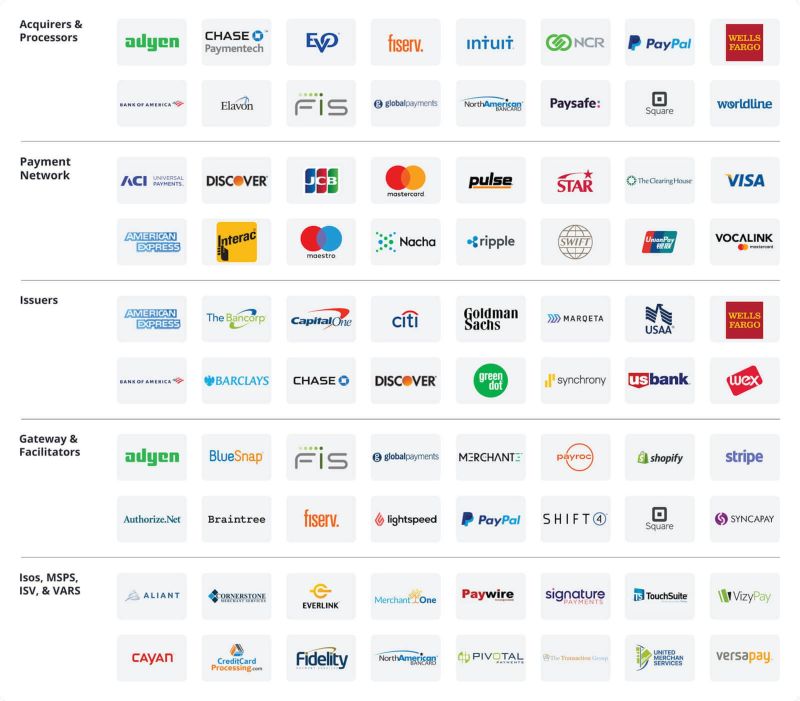
Payment Facilitation Eco System


Merchants register with a payment facilitator and give basic company data, like their legal name, tax identification number, and banking information. The payment facilitator conducts a risk assessment on merchants.

Merchants will be accepting payments using the payment facilitator after they have been approved. Payment facilitator gathers transactions from several merchants and deposits them into a single account.

After deducting fees and other costs, the payment facilitator settles the funds into the merchant's bank account, usually on a daily or weekly basis.

Embedded Finance in Payments - Thanks to Whitesight

Over the past years Payments have been disrupted and transformed like NO other business in financial services. Embedded Finance is now triggering a new metamorphosis, changing the name of the game across the entire value chain.

As traditional payments have been ceding market share to online and software-led channels, players like Stripe, Block (ex Square), Adyen or PayPal have taken a dominant position.

Dominant players are pursuing a multi-level strategy

1) They drive their ecosystem play 

2) They strengthen profitability (increase net take rate and alternative monetization) though payments is NOT a profitable business in EU (not like US :) )

3) They diversify their revenue model 

4) They lock-in businesses not on price but on value-added. 

This is one of the many ways in which embedded finance is completely transforming business and financial services as we know them.

 It is not just about processing (or acquiring) anymore, but about end-to-end merchant propositions that extend to all kinds of merchant needs.

In this direction, players (like adyen, paypal, stripe), provide now an additional connecting layer between the payments’ infrastructure and their merchants, acting as an indispensable partner that embeds additional offerings (Lending, issuing, payroll, treasury, tax and Insurance are value-added services (VAS)) into an ECOSYSTEM, that drive differentiation and retention.

Adyen & Stripe for Platforms offers the main functionalities that a platform might need

- Onboarding, payment processing, payouts, 

- Packaged into a customizable, 

- Out-of-the-box solution together with issuing, capital and account embedded finance capabilities

Platforms and marketplaces are clearly the business model to dominate business and finance, now and in the future. 

If Banks, FIs can offer their market participants not only payments but also onboarding, payouts, cards, accounts, fraud management, lending – based on their transactions that process – and a dozen of other services that not only make customers life easier but also help Banks, FIs to generate more business.


Thursday, June 01, 2023

Global Brand Card Networks Worldwide

 The world’s #1 debit card? UnionPay from China! . Visa is #2.

UnionPay, a Chinese state-owned company, is accepted in about 180 countries around the world.

🔹200 million cards issued outside China 🔹40 million merchants outside China accept UnionPay cards 🔹Banks in 78 countries issue UnionPay cards


Monday, April 10, 2023

EMV Debit vs. PIN Debit

First, let’s clear up some confusion about EMV debit and PIN debit. EMV debit cards function the same as previous magnetic stripe debit cards. Using an EMV debit card will deduct funds from a bank account. It still requires entering a PIN or signing for a transaction.

EMV debit is not a new or separate category of debit card – it’s simply debit cards with a chip for increased security. The two main types of debit are still PIN debit and signature debit. As of 2023, there are no cost differences for accepting a chip debit card vs. a magstripe debit card.

My new EMV terminal doesn’t require a PIN for debit – what’s the issue?

In order for a terminal to prompt for a PIN when a customer uses an EMV debit card, both the terminal and the card must be configured to allow PIN entry. There are 4 main reasons why your machine may not prompt a customer for their PIN:

  • Terminal is not set up with the common AID
  • Customer did not choose the common AID
  • Card is not PIN-preferring
  • Your machine does not have the correct injection keys

Common Debit Card Networks and Their Fees in US

Across the U.S., there are many common debit card networks, and below is a listing of some of the common fees for reference. 

Accel Interchange & Network Rates

Pin Debit

0.05% + $0.21

Pinless Bill Pay

0.65% + $0.13

Internet PIN

0.05% + $0.21

NYCE Interchange & Network Rates

QSR

1.30% + $0.03

PIN Debit

0.05% + $0.21

Internet PIN

0.05% + $0.21

Pulse Interchange & Network Rates

PIN Debit

0.05% + $0.21

Petroleum Base

0.80% + $0.15

Pinless Bill Pay

1.59% + $0.12

Shazam Interchange & Rate Fees

General Retail

0.85% + $0.15

Business Debit Card Present

1.70% + $0.09

Internet PIN

1.15% + $0.15

Star Interchange & Network Rates

QSR

1.15% + $0.08

Petroleum

0.85% + $0.17

Internet PIN

0.90% + $0.195

Understanding the different fees the PIN networks charge is important because it impacts many layers as money flows through the payment system.

For example, merchant transactions involve the merchant, acquiring bank, payment processor, and the issuing bank. All of those layers charge a fee that the consumer never sees but impacts the economics of each layer.

The PIN debit card can help make the transaction more secure for the merchant and the entire payment process.

Tuesday, March 28, 2023

The Durbin Amendment

One piece of legislation that nearly all merchants are familiar with is the Durbin Amendment. This still stands as the only piece of major legislation that has any impact on regulating the fees a merchant pays for accepting card payments. While this is limited to debit card payments, both signature and PIN, having debit interchange regulated to just 0.05% plus $0.22 (in most cases) from cards issued by banks with greater than $10 billion in assets was a win for most — not all, but most. Beyond just this fee regulation, however, came other critical elements: the addition of requiring two unaffiliated debit card networks for least cost routing and the merchant’s ability to direct this routing.

Merchants do very much flex their routing muscles, using a series of consumer behavior shifting tactics as well as complex routing hierarchies. As discussed in our previous article regarding PIN debit, merchants can lower their acceptance costs through these strategies while still providing a high-quality consumer experience. This, on the surface, sounds great for merchants; however, even the PIN space is dominated by Visa and Mastercard’s combined 70% plus market share. This begs the question, how much choice and competition is there considering the market share and how did it get this way

Network incentives create limitations for merchants using PINless debit routing

While Visa and other major networks often create incentive arrangements with individual merchants regarding preferred routing, these networks creating incentive arrangements with issuing banks, as alleged, becomes problematic. This is especially so under the lens of a card not present environment, such as mobile or e-commerce. We have talked about this before, where only a few regional debit networks can support PINless debit routing. Those networks are STAR, Accel, NYCE, and Pulse. If a merchant wanted to be in more control of their routing and utilize PINless as a strategy, they could only influence customers with cards issued with at least one of these networks.

Visa and Mastercard have no incentive to have Interlink and Maestro participate as PINless networks as this cannibalizes their signature debit rails. As this probe is seeking to address, they do have incentives to arrange deals with issuers to allegedly reduce competition by offering incentives to advance their PIN networks at the expense of others. Whether this is a fair market practice is clearly up for debate, and we are certain that more information will become available as to how the global brands flex their incentive dollars. 

A brief primer on network tokenization

 Network tokenization refers to solutions offered by Visa (Visa Token Service (VTS)) and separately also by Mastercard (Mastercard Digital Enablement Service (MDES)). Tokenization is simply a process that replaces a card’s primary account number (PAN) — the 16-digit number on the plastic card — and other sensitive card details with a unique identifier, or “token” provisioned and managed by the card network.

  • Acquirer level tokenization, which is typically provided by an ecommerce merchant’s payments processor — your standard Adyen, Stripe, Braintree, Cybersource, etc. — also protects the card data from being compromised at the merchant level.
  • But network tokens go one level beyond: network tokens provide increased security through the use of cryptograms, such that each token is unique to the specific transactional context (unique to a specific combination of PAN, device/channel, and merchant). So where gateway/acquirer tokens are theoretically decipherable and can be used by sophisticated bad actors to exploit cardholders/merchants, network tokens are specific to domains, making the lives of fraudsters harder.

Wednesday, March 22, 2023

Signature debit vs. PIN debit rails

 The regional debit networks in the U.S. play a pivotal role in the payments ecosystem, providing reliable networks to conduct our debit transactions over. That being said, many consumers go about their day without even realizing that there is a war being waged over exactly how they use their debit cards

Signature debit vs. PIN debit rails

On one side we have the signature debit rails, often referred to as “processing as credit,” which are maintained by the major networks like Visa, Mastercard, and Discover. In the other corner is the true debit rail, which is maintained by regional debit networks like Interlink, Maestro, Accel, STAR, NYCE, Pulse, Jeanie, Culiance, Shazam, and AFFN.


Redbridge Debt & Treasury Advisory report - Market share data on the PIN debit networks


Market share by regional debit network

According to data accumulated from our database, we wanted to provide some insights into market share. In the card present space, we see the following market shares in terms of dollar volume:

  • 47% – Interlink
  • 25% – STAR
  • 13% – Maestro
  • 12% – PIN Authorized Visa Debit
  • 3% – All other networks

When we reviewed our data to perform the same exercise in the card not present space, we saw the following market share in terms of volume:

  • 60% – STAR
  • 20% – Pulse
  • 15% – NYCE
  • 5% – Accel

With the stage now set, the conversation can truly take shape on why this probe is likely to yield, at its minimum, very interesting information

Breakdown of the different debit card networks in the US


Sunday, January 29, 2023

An Overview of Payments Switch Products

A typical payment transaction passes through one or more switching platforms from acquirer to network and on to an issuer’s switching application. The switching systems drive transactions from initiation to destination. They are the cogs in the payments machine that never stop turning. These switches process billions of ATM and POS transactions in milliseconds every day. For example, Mastercard drives a network response time that averages 140 milliseconds per transaction, to process over 22 billion Mastercard branded transactions per year. 

With today's polymorphic payments landscape there is a real demand for smarter, more efficient payments systems - a necessity for the volumes being handled. The capability, reliability and efficiency of the payment switches are crucial in delivering today’s customer expectations.

As a result, the switching applications market is witnessing stiff competition. 

Authentic by NCR

Authentic is an agile, high-performance open development platform for switching and authorising payment transactions used by issuers, acquirers, payment service providers, ISOs and merchants. Authentic can be deployed as a platform-independent, high-performance switch to route transactions between multiple acquirers, issuers, networks and other switches. It is benchmarked at 10,000 transactions per second.

BASE24, UP BASE24-eps and Postilion by ACI Worldwide:

BASE24 runs on HP’s NonStop server, providing a robust, high-performance, fault-tolerant solution for processing consumer payment transactions. It provides everything from ATM device driving and POS channel management to transaction routing and authorization. Other capabilities include host and interchange interfaces, settlement, management reporting, network control and stored value functionality. UP BASE24-eps, is the next-generation payment switch. It offers better flexibility, improved risk management and many other improved features.

Postilion is a fully integrated suite of products for financial institutions and processors for acquiring, routing and authorising payments, as well as, managing the card issuance and merchant acquiring side of the business.

SmartVista by BPC group

BPC’s SmartVista platform manages the entire payments lifecycle, with components designed to work and grow together: high-performance authorisation switching and routing, full ATM and POS management, comprehensive card management, advanced fraud prevention, loyalty program management, card personalisation and production, billing and merchant management and integrated Internet and mobile banking. SmartVista’s broad range of capabilities effectively support and manage payments across all channels, including Internet and mobile applications.

Tranzware by CompassPlus

Tranzware is a high-performance scalable multi-card processing solution enables efficient electronic funds transfer, inter-network switching and the handling of an unlimited number of devices and delivery channels. The system was specifically designed to deliver great flexibility and options for system expansion unrestricted by hardware, operating system, networks and host systems, financial products, types of transactions, devices and delivery channels.

IST/Switch, Cortex by FIS

IST/Switch is an open platform high-performance credit and debit processing switch. As a front-end processor that handles unlimited devices, networks and host systems, IST/Switch manages ATM and POS networks of any size, electronic funds transfer and inter-network switching. It provides batch and online network interfaces required to process credit/debit transactions through all the major card associations and networks, including Visa, MasterCard, Interac, American Express, Diners etc.

Still LOT more switching products in the market. This is just high level overview of few. 

Saturday, September 24, 2022

How do Apple Pay and Google Pay handle the sensitive CARD Info?


2 1. Registering your credit card flow 2. Basic payment flow
3 1️⃣ The registration flow is represented by steps 1~3 for both cases.
𝐀𝐩𝐩𝐥𝐞 𝐏𝐚𝐲: It doesn’t store any card info. It passes the card info to the bank. Bank returns a token called DAN (device account number). iPhone then stores DAN into a special hardware chip.

4 𝐆𝐨𝐨𝐠𝐥𝐞 𝐏𝐚𝐲: When you register the credit card with Google Pay, the card info is stored in the Google server. Google returns a payment token to the phone.

5 2️⃣ When you click the “Pay” button on your phone, the basic payment flow starts. Here are the differences: 𝐀𝐩𝐩𝐥𝐞 𝐏𝐚𝐲: For iPhone, the e-commerce server passes the DAN to the bank.
6 𝐆𝐨𝐨𝐠𝐥𝐞 𝐏𝐚𝐲: The e-commerce server passes the payment token to the Google server. Google server looks up the card info and passes it to the bank. In the diagram, the red arrow means the credit card info is available on the public network, although it is encrypted.
7 👉 Over to you: Apple needs to discuss the DAN details with banks. It takes time and effort, but the benefit is that the credit card info is on the public network only once.

Apple pay: the apple server looks at the card info and determines how to route. Since the card data is not stored on the apple server, apple server is not in the illustration. More detail: support.apple.com/en-us/HT203027 Google pay, more details: developers.google.com/pay/api/androi