Saturday, March 28, 2015

Taking Tokenization Beyond The Transaction


Afbeeldingsresultaat voor Taking Tokenization Beyond The Transaction


Apple Pay has elevated mobile payments to a topic of conversation across
financial institutions and credit unions, large and small.

And many of those conversations relate to how these more “traditional”
players get their foot in the mobile payments door.

Tokenization has become a very popular concept in payments.
What impact does tokenization have on financial institutions and the payments industry? 

The impact, we’re seeing on financial institutions and the payments industry relative to
tokenization has been one of tremendous interest, especially since the launch of
Apple Pay late last year.

Apple Pay is the first use case for tokenization specifically through the EMVCo specifications,
which utilize tokenization for static tokens.

Therefore, the token resides on a user’s phone instead of their card number.

One of the main concerns with mobile payments for our clients and their cardholders has been security.

So now with tokenization, the token replaces the card number, which isn’t exposed
on the phone to the merchant or through the transaction message.
That’s a very powerful message for the cardholder.

For Banks, FIs and credit unions, tokenization is a strategy to combine with EMV and
  • Neural Fraud Detection
  • Call center services
  • Chargeback support
  • Other risk tools
to assist in providing holistic support aimed at mitigating card fraud.
       -Mobile to mitigate card-not-present fraud.


As new technologies and security approaches are scrambling to become
the champion in the mobile payments space, is tokenization here to stay,
and what may be next?

It may be too early to say if there’s a champion or one security technology
that may dominate the payments space.
Tokenization has definitely spurred a proposed standard,
and there could be others that adopt the technology for NFC and possibly HCE as well.

What we can say is that we are poised to complement
these new technologies,
new mobile securities and
additional participants to the mobile payments industry
to ensure Banks, FIs and CUs can participate with their cards and service
their cardholders through traditional methods or via their participation in
the mobile payments space.

Tokenization as one more technology change that continues to
address the individual needs of consumers.

We are focused on providing integrated, omni channel payments services
and wrapping security around every transaction regardless
of how the consumer chooses to pay.


Saturday, March 21, 2015

Mobile - Insecurity

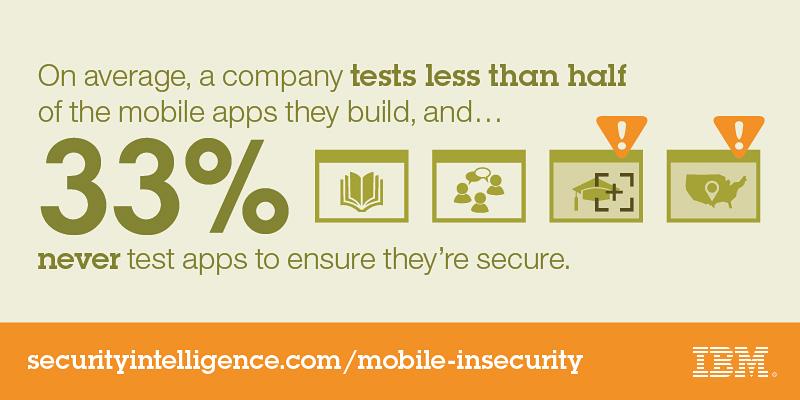
IBM Study finds that 33% organization never test their Mobile Apps whether they are really secure. Its really sad to see that. Hope this trend will get change. And companies will realized that secuirty is primary incredient for the payments business.


Embedded image permalink

Whats NEXT in payments?

Just thinking , what would be the next steps in the payments.

Lot of innovation is happening now in payments.

Disruption, then innovation. Or is it innovation then disruption?

Either way you slice it, the payments industry is going through a massive wave of disruptive innovation.

According to me, PAYMENTS itself a ICEBERG. In that, what we can't see, its CRITICAL. The same word, can applicable to PAYMENTS INNOVATION too.

Remember, Apple wasn’t in payments awhile back either. In other words, these could be the players who maybe you should be sweating bullets over, and should be keeping you up at night.”

Sunday, February 22, 2015

Digital Banking III - How to get there?

Traditional banks are organized around money in branches.
  • Their thinking,
  • Their technology,
  • Their incentive systems,
  • Their knowledge about customers
are all structured around branches and product lines.

To become digital,

- Banks have to focus on electronic platforms and data as their core and branches as secondary.
- To get to an integrated electronic platform,  banks need to replace their old core systems.

Banks are shutting down branches
           - Europe closed 20,000 in the last four years.
           - Thousands have been closed in the U.S.
           - It has been predicted that banks will go from 1 branch per 20,000 customers now to 1 branch per 250,000 customers.
          - Banks will move to electronic channels where a transaction is much cheaper than one   performed by a teller.


Digital banking is more than getting consumers to use online or mobile banking or building a new app – it is a way to run an entire organization.

This new model touches product development, distribution, front and back office operations, marketing communication and the entire customer experience.

Image result for digital banking benefit

When engaging with a digital bank, consumers should benefit from the following:
  • Shop for a financial institution online or with a mobile device
  • Open a new account by using a computer, tablet or mobile device using image capture to save steps
  • Communication with their bank through the channel of choice, potentially with live video tools
  • Financial insights pre-login, such as balances, recent transactions and product recommendations
  • Real-time and secure transactions online or at the point of sale with a mobile device
  • Personalized and predictive offers that leverage geographic as well as contextualized insight
  • Real-time digital money management including alerts and notifications
  • Integration of financial services with daily activities.

Digital Maturity Model


Dell has developed a comprehensive Digital Maturity Model (DMM) to map a financial institution’s current digital state allowing an organization to develop a comprehensive action plan that is completely aligned to overall strategic goals.

digital_maturity_model


Monday, February 16, 2015

Today's Complex - Payment System

TRADITIONAL PAYMENT SYSTEM


TODAY'S COMPLEX PAYMENT SYSTEM FOR END USER


Sunday, February 15, 2015

Digital Banking - II


According to McKinsey Report,

    Digital transformation will put upward of 30 percent of the revenues of a typical European bank in play, particularly in high-turnover products such as personal loans and payments.
  • Banks can remove 20 to 25 percent of their cost base by leveraging this digital shift to transform how they process and service.
  • Put together, the economics of a digital bank will give it a vast competitive edge over a traditional incumbent. It’s fair to say that getting digital banking right is a do-or-die challenge.

How to go digital without going crazy?
  • Maximize the use of existing technology
  • Apply lightweight technology interventions
  • Place a few selective big bets
Address the people dynamics
  • Set the right structure and incentives
  • Increase the focus on business outcomes, not digital activity
  • Formulate and implement a people vision
What exactly in the value of DIGITAL BANKING?
    While the cost-saving opportunity for banks comes in many forms and touches every area of the bank, there are two areas that are especially significant and represent the bulk of the value:
  • Automation of servicing and fulfillment processes and migration of front-end activity to digital channels. On automation, European banks can realize 40 to 90 percent cost reductions in a range of internal processes through careful deployment of work-flow tools and self-servicing capabilities for customers and staff.
  • On front-end transformation, beyond diverting existing branch activity into digital channels, digital tools can also be used to augment frontline servicing (for example, with iPad forms rather than paper forms, or videoconference access to specialists to maximize their utilization)—easily doubling staff productivity and enhancing the customer experience.
In the near term, we expect shorter-tenure, high-turnover products like credit cards, loans, and payments to see the most digital transformation. In fact, these are the areas most under attack from new digital entrants.

Looking further ahead, bank accounts and mortgages, which together drive more than 50 percent of many banks’ revenues and usually provide “sticky” annuity streams, will be brought into the fray.


Digital Banking


“Digital” is the new buzz word in the banking sector, with banks all around the globe hopping onto the digital bandwagon.

Just like how the introduction of mobile technology massively disrupted innovation in the banking sector, digital is now doing the same.

Banks of all sizes are making sizeable investments in digital initiatives in order to maintain a competitive edge. So, what does “digital” actually mean?

That was the time, I was able to relatively to to distinguish between the sorts of
  •    Internet banking
  •    Online banking
  •    Electronic banking
  1. Internet banking would mean browser-based banking.
  2. Online Banking means, It includes software or even telephone banking.
  3. Electronic Banking, would mean the entire range of electronic payment and transaction processes including card terminal transactions.

And now, there is new contender, “digital banking” made a recent appearance and it looks like it is here to stay.

According to PWC, Digital Banking means,

"The full extent of what digital can offer customers goes beyond the basic mobile and internet banking services that are now widely provided, although there is still value to be obtained for many banks from simply delivering these basic services well.”

 “Digital banking will evolve into a richer set of offerings, providing new value for banks and their customers through a new ‘digital feature set’, based on innovations in:
         - User experience;
         - Mobile devices and
         - Networks;
         - Social media and
         - Collaboration;
        -  Customer analytics;
        -  Channel Ïntegration.”


“Digital Banking – a new concept in the area of electronic banking,
 which aims to enrich standard online and mobile banking services by integrating digital technologies,  for example strategic analytics tools, social media interactions, innovative payment solutions, mobile technology and a focus on user experience.

According to ACCENTURE,

"Banks must reconnect with customers, rebuild trust and rethink the banking experience.
Digital technologies and solutions provide an excellent opportunity for forward-thinking financial institutions to move past this challenging market environment. If banks do not step up to digital, non-banking organizations will seize the opportunity to own the customer experience layer and provide alternate means of distribution. By having a truly digital business, banks can move away from reactive, transaction-based customer relationships, toward a more intimate, proactive and personalized experience across multiple channels, products and services"


Sunday, January 11, 2015

TARGET2

TARGET (Trans-European Automated Real-time Gross settlement Express Transfer) was launched in 1999 and comprised the national real-time gross settlement (RTGS) systems of EU Member States participating in the Economic and Monetary Union (EMU), the ECB payment mechanism and an interlinking mechanism.

TARGET2 is the new trans-European payment system which replaced TARGET. 

 The new system was developed to cater for the needs generated both by the enlargement of the European Union (EU) and by technological advances, as well as to meet market participants’ demands for safe and efficient payment systems across Europe.

TARGET2 is based on a technically centralized platform (Single Shared Platform – SSP), which is provided by the central banks of Germany, France and Italy and replaces the decentralized structure of the original TARGET system. With TARGET2, the Eurosystem provides participant Member states with payment services based on a single price structure for both domestic and cross-border payments. 
TARGET2-NL The Dutch component of the ESCB’s TARGET2 RTGS system.

TARGET2 was introduced in the Netherlands on 18 Feb 2008. The difference vis-à-vis the previous version of TARGET is that it uses one central technical platform for payments, eliminating the need to maintain national large-value payment systems. Financial institutions send their large-value payments directly to the platform. Most Dutch credit institutions participate in TARGET2-NL.


Saturday, January 10, 2015

DEBT BOMB

 
Debt Bomb occurs when a major financial institution,
such as a multinational bank, 
 
defaults on its obligations that causes disruption not only in the financial system 
of the institution's home country,
 
but also in the global financial system as a whole.
 
A debt bomb can occur also if consumer spending is based heavily on debt. For example, if a nation incurred huge credit card debt, individual debt holders could default in mass and create trouble for creditors.


Central counterparty clearing house (CCP)

Central counterparty clearing house (CCP) is an organization that exists
in various countries that helps facilitate trading done
in derivatives and equities markets.
 
These clearing houses are often operated by the major banks
in the country.
 
CCPs benefit both parties in a transaction
because they bear most of the credit risk.
 
If two individuals deal with one another,
the buyer bears the credit risk of the seller, and vice versa.
 
There are two main processes that are carried out by CCPs:
clearing and settlement of market transactions.
 
-       Clearing relates to identifying the obligations of both parties on either side of a transaction.
 
-       Settlement occurs when the final transfer of securities and funds occur.


In Europe:

European Association of CCP Clearing Houses (EACH) represents the interests of CCPs in Europe since 1992. EACH currently has 18 members from 14 different European countries.
EACH works with public authorities and industry stakeholders in order to: 
·         Offer the consolidated opinion of our membership in regulatory discussions and consultations
·         Help member CCPs to agree appropriate standards and guidelines for the industry


In Netherlands:
Holland Clearing House (HCH) is a central counterparty for derivatives. They deliver CCP Services for the derivatives Multilateral Trading Facility (MTF), TOM MTF.
 
HCH is regulated and supervised in the Netherlands by Netherlands Authority for the Financial Markets (AFM) and De Nederlandsche Bank (the Dutch Central Bank; DNB).

As of December 2014, Intercontinental Exchange (ICE Clear Europe), a leading global network of exchanges and clearinghouses, has completed the previously announced acquisition of a majority stake in Holland Clearing House (HCH).

Netting


Netting is consolidating the value of two or more transactions, payments or positions
 in order to create a single value. Netting entails offsetting
the value of multiple positions,
and can be used to determine which party is owed remuneration in a multiparty agreement.
 
In the context of credit risk, there are at least three specific types of netting
 
Close-out netting – A special form of netting which follows certain
contractually agreed events (such as the opening of insolvency proceedings),
whereby all existing obligations are accelerated such that they become due immediately.
 
Netting by novation – The legal obligations of the parties
to make required payments under one or more series of
related transactions are canceled and a new obligation to make only
the net payments is created.

The parties to the new obligation may be
 the same as the parties to the existing obligation.
Alternatively, in the context of some clearing house arrangements,
there may be some substitution of parties.
 
Position netting - Also called as Payment/Advisory/Settlement netting,
is netting of orders in respect of obligations
between one or more parties which neither satisfies
nor discharges those original individual obligations.
This can be applied either bilaterally or multilaterally and on related or unrelated transactions.
 
-     Bilateral Netting, the process of consolidating swap agreements
      between two parties into a single agreement.
      As a result, instead of each swap agreement leading to a stream
      of individual payments by either party,
      all of the swaps are netted together 
      so that only one net payment is being made to one party based on the flows of the combined swaps.
 
-     Multilateral Netting, an arrangement among multiple parties that transactions be summed,
      rather than settled individually.
      Multilateral netting not only streamlines
      the settlement process, it also reduces risk by
      specifying that, in the event of a default or some other termination event, 
      all outstanding contracts are likewise terminated.
     
       Generally speaking, multilateral netting is enabled via a membership organization like an exchange.
 
 
Financial Facts:
 
 
·         Starbucks has operations in more countries than
both Goldman Sachs & JP Morgan Chase.
·         If you invested $100 in Microsoft in 1986, instead of
buying a version of Windows 1.0, it would be worth $46,400 today.

Saturday, December 13, 2014

Tokenization Tussle


What do tokens, or digital replacements for sensitive payment account information,
particularly the primary payment card number (PAN), have in common with interchange and other fees linked to credit and debit cards?

Easy: Tokens, like transaction pricing, have become a battleground between competing interests in the payments industry.

For example, models under development include those from EMVCo, which is controlled by the major payment card networks, and The Clearing House, which is controlled by banks. Other proposals have come from the PCI Security Standards Council and the Accredited Standards Committee X9.

While there are plenty of technical matters to be settled, one of the hottest issues under debate is the use of static and dynamic tokens. Static tokens are easier to implement, but dynamic, or one-time-use tokens, offer even more security because they change with each transaction.

Meanwhile, some payments executives fear Visa and MasterCard are using closed token standards to extend the domination they enjoy in the magnetic-stripe card world into the emerging realms of Europay-MasterCard-Visa (EMV) chip cards and mobile payments. Others worry that separate groups are developing standards without enough back-and-forth among prospective token users and token originators.

In late July, several major merchant trade groups called for an open approach to tokenization, as did the Secure Remote Payments Council (SRPc), which represents debit networks.

The Mobile Payments Industry Workgroup (MPIW), a group formed under the auspices of the Federal Reserve banks of Boston and Atlanta and which includes payments executives, also urged the industry to find common ground on tokenization.

The 10 biggest issues in e-payments

The 10 biggest issues in e-payments

 
  1. The Tokenization Tussle
  2. Can Apple Revive Mobile Wallets’ Sagging Prospects?
  3. Choking on Operation Choke Point
  4. Will Anything Stop Data Breaches?
  5. EMV’s Race Against the Clock
  6. Meet the Value-Added Reseller
  7. Look Who’s Coming to the Point of Sale
  8. If at First You Don’t Succeed…
  9. The Real Issues Surrounding Virtual Currencies
  10. The Painful Sales Adjustment